
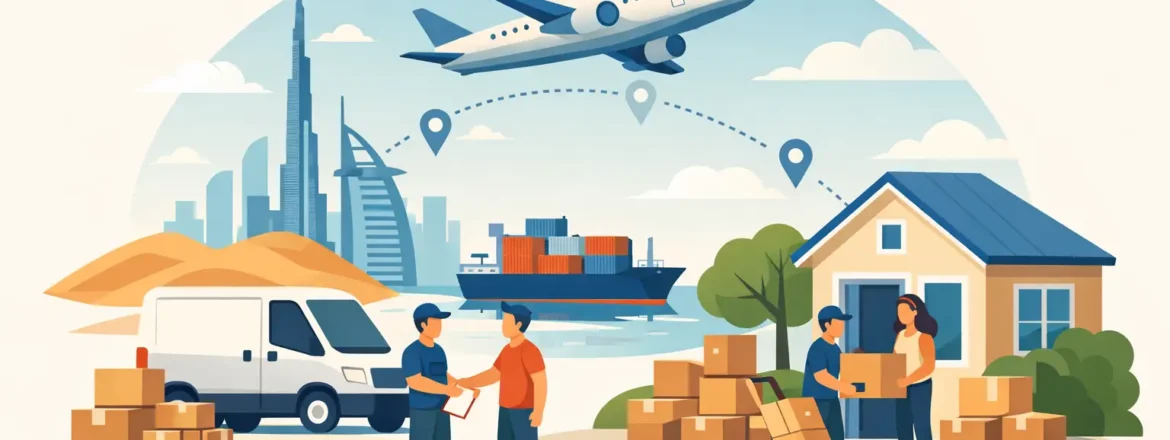
If you are sending boxes to family in Karachi, household goods to Lahore, or commercial stock to Mumbai, the real question is not just how to ship. It is how to get door to door cargo from Dubai without delays, confusing paperwork, or surprise costs. For most senders, convenience matters as much as price, because cargo is only easy when pickup, transit, customs, and final delivery are handled properly.
Why door to door cargo from Dubai works for busy senders
A lot of people in the UAE do not have the time to compare freight steps one by one. They do not want to arrange local transport to a warehouse, speak to multiple agents, or chase updates across different stages of the shipment. Door-to-door service solves that problem by putting the process under one provider, from collection in the UAE to delivery at the destination address.
This matters for families sending personal items and for businesses moving regular cargo. A household sender usually wants simple booking, safe packing, and confidence that the shipment will reach the right home. A commercial shipper wants timelines, documentation support, and fewer operational gaps. In both cases, door-to-door service reduces handoffs, and fewer handoffs usually mean fewer mistakes.
There is also a practical cost benefit. A low freight rate can stop looking cheap if you still need to pay separately for pickup, packing, customs handling, storage, or last-mile delivery. A complete service gives a clearer picture of total shipping cost.
What is included in door to door cargo from Dubai
Door-to-door cargo is more than transport from one airport or port to another. It is a managed shipping process built around the sender’s address and the receiver’s address.
The service usually starts with pickup. This can include collection from homes, apartments, shops, warehouses, or offices across major UAE locations. For many customers, that is the first major advantage because it removes the need to move heavy or bulky items on their own.
After pickup, the cargo is checked, packed or repacked if needed, labeled, and prepared for shipment. The next stage depends on the route and urgency. Air freight is typically chosen when speed matters. Sea freight is often the better fit for larger household cargo, bulk shipments, or customers who want a more affordable option and can work with a longer transit time.
Customs clearance is another key part of the service. This is often where inexperienced shippers run into trouble. Missing documents, incorrect item descriptions, or weak packaging can all slow a shipment down. A door-to-door provider helps manage these requirements before the cargo moves and again when it arrives.
The final step is delivery to the consignee’s address. That is what makes the service practical. The receiver does not need to collect the shipment from a port, terminal, or cargo office unless the route or shipment type requires a special arrangement.
Choosing the right shipping method
The best shipping method depends on what you are sending, where it is going, and how quickly it needs to arrive.
Air freight for urgent cargo
Air freight makes sense for urgent personal shipments, business samples, documents, electronics, and smaller high-value items. It is faster, but the rate is generally higher than sea freight. If timing is the priority, that trade-off is often worth it.
Sea freight for larger and heavier loads
Sea freight is a strong option for household cargo, furniture, excess baggage, and bulk commercial goods. It is usually more economical for larger volumes. The trade-off is transit time. If the cargo is not time-sensitive, sea shipping can offer much better value.
Road support and local handling
For some shipments, road transport supports the pickup side, consolidation, and final delivery process. This is especially useful when cargo comes from different UAE locations or when multiple boxes need to be grouped under one shipment.
What customers should prepare before booking
A smooth shipment starts before the cargo is collected. The sender should know what is being shipped, the approximate size or weight, and the delivery destination. Even a basic inventory helps. It makes quoting easier and reduces the chance of customs questions later.
Accurate receiver details are just as important. A complete name, phone number, and delivery address can prevent delays at the final stage. This sounds simple, but incomplete destination information causes more issues than many customers expect.
For personal cargo, it helps to separate fragile items, valuables, and restricted goods before pickup. For commercial cargo, invoices, packing lists, and product descriptions should be prepared early. If the shipment includes mixed items, clear labeling saves time.
Common concerns with door to door cargo from Dubai
Customers usually ask the same practical questions. How long will it take? Will the items arrive safely? What happens if customs asks for more information? These are valid concerns, and the answer depends on the route, cargo type, and documentation.
Transit time is never one fixed number for every shipment. Air cargo is faster, but customs processing and delivery location still affect the schedule. Sea cargo takes longer, but it may be the smarter choice for non-urgent shipments with higher volume.
Safety depends on packing, handling, and route planning. Fragile items need proper materials and careful loading. Commercial shipments need correct classification and secure movement. Good service is not only about moving cargo quickly. It is about moving it without damage, loss, or avoidable hold-ups.
Pricing also depends on real shipment details. Weight, volume, destination, service level, and item category all matter. The cheapest quote is not always the best if key services are missing. Customers should look at the full process, not just the headline rate.
Why Pakistan and India need specialized handling
Shipping to Pakistan and India is common from the UAE, but that does not mean every provider handles these routes equally well. These corridors have high demand, a wide mix of personal and commercial cargo, and destination-specific documentation and delivery expectations.
A provider with regular movement to cities across Pakistan and India is often better positioned to manage practical issues early. That includes pickup planning in the UAE, proper cargo preparation, customs coordination, and final-mile delivery arrangements. Experience on these routes can make the process more predictable, especially for first-time senders.
This is one reason many customers prefer a service-focused cargo partner instead of a basic freight option. They want support that fits the route, not just transport space.
Who benefits most from this service
Door-to-door shipping is a strong fit for expatriates sending gifts, clothes, kitchen items, electronics, or full household cargo back home. It also works well for families relocating and needing help with packing and removals.
Small businesses benefit too. Traders, online sellers, and wholesalers often need dependable cargo movement without building their own logistics chain. A provider that can collect, pack, clear, store, and deliver saves time and reduces coordination pressure.
That is where a company like Bab Al Saad Cargo Services fits naturally. For customers shipping from the UAE to Pakistan and India, a hands-on service model with pickup coverage, customs support, and final delivery is often the difference between a stressful shipment and a straightforward one.
How to choose a reliable cargo partner
Start with service coverage. A provider should be able to collect from your location and deliver to your destination without passing responsibility around too much. Then look at what is actually included – pickup, packing, freight, customs clearance, storage if needed, and final delivery.
Communication matters just as much as transport. Customers should be able to get clear answers about timing, documentation, and pricing before the shipment moves. If the process feels vague at the booking stage, it usually does not improve later.
It also helps to choose a company that handles both personal and commercial cargo. That kind of range often means stronger operational experience, especially when shipments vary in size and urgency.
Door-to-door cargo is at its best when it feels simple for the sender, even though a lot is happening behind the scenes. If your provider can collect on time, pack correctly, clear efficiently, and deliver safely, you are not just buying freight. You are buying peace of mind, and that is usually the part people remember most.