
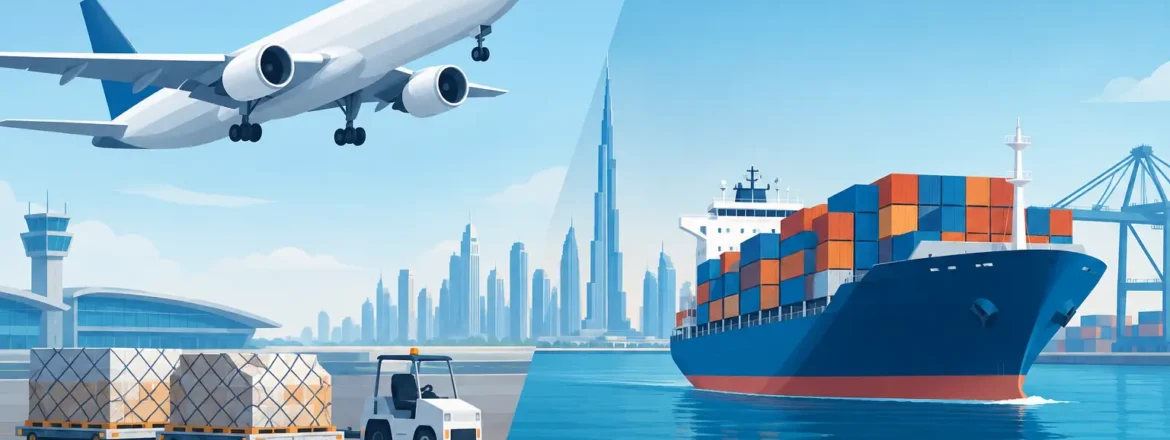
A family in Dubai sending urgent documents and essential items to Pakistan has very different needs from a trader moving cartons of stock to India. That is why the choice between air freight vs sea should not be based on price alone. The right option depends on how quickly the cargo is needed, how much you are sending, what the goods are, and whether you need door-to-door support.
For UAE residents, businesses, and exporters, both air and sea cargo can be safe and dependable when planned correctly. The better choice is the one that protects your delivery schedule and your budget without creating unnecessary stress at customs or at the destination.
Air Freight vs Sea: The Main Difference
Air freight moves cargo by aircraft and is generally chosen when delivery speed is the priority. Sea freight moves cargo in shipping containers and is often the more affordable option for larger, heavier, or less urgent shipments.
The difference is not simply that one is fast and one is economical. Air freight is usually priced by chargeable weight, which considers the actual weight or the space the shipment occupies. Sea freight is better suited to cargo that takes up more volume, especially cartons, household goods, furniture, commercial stock, and relocation shipments.
From the UAE, air cargo can be a practical choice for time-sensitive shipments to Pakistan, India, the UK, the USA, and other destinations. Sea cargo gives customers more room to plan, consolidate goods, and reduce the shipping cost per item. Both services may also involve pickup, export handling, customs processes, destination clearance, and final delivery. Those details matter as much as the transport method itself.
When Air Freight Is the Better Choice
Air freight makes sense when a delay would cost more than the extra shipping charge. This may apply to a business waiting for replacement parts, a student needing personal essentials, or a family sending urgent items before a wedding, holiday, or relocation deadline.
Speed is the clearest advantage. While actual transit times depend on the destination, airline schedules, customs checks, and local delivery arrangements, air shipments usually arrive far sooner than cargo sent by sea. For many shipments from the UAE to Pakistan or India, that time difference can be significant.
Air freight is also a strong option for smaller packages and lightweight commercial goods. Samples, documents, electronics, garments, spare parts, and compact high-value products are common examples. A smaller shipment may be easier to manage by air because it does not require the volume needed to make sea freight economical.
There are, however, limits. Airlines have strict rules for dangerous goods, batteries, liquids, perfumes, aerosols, and other restricted items. Packing must be secure and suitable for air transport, and dimensions matter. A large but light package can be expensive because airlines charge for the space it occupies, not only its scale weight.
For personal cargo, air freight is often best when you are sending only the items that need to arrive quickly. The remaining household goods can sometimes travel by sea at a lower cost. This split approach is useful for families moving from the UAE who need immediate essentials before the full shipment reaches its destination.
Air freight works best for
Air cargo is usually the practical route when your shipment is urgent, compact, valuable, or needed for a fixed date. It is particularly suitable for time-sensitive business cargo and personal items that cannot wait for a sea schedule.
Before confirming air freight, ask for a clear estimate based on the packed dimensions and weight. This avoids surprises after collection, especially if cartons are oversized or packed with light, bulky materials.
When Sea Freight Is the Better Choice
Sea freight is often the more cost-effective choice for bigger shipments that do not need immediate delivery. It is widely used for household moves, furniture, appliances, excess baggage, commercial cartons, textiles, machinery, and bulk inventory.
The biggest benefit is capacity. A sea shipment can handle far more volume than an air shipment, making it practical for customers who are relocating or businesses that regularly send stock to Pakistan and India. Rather than paying premium air rates for many large cartons, sea freight allows the shipment to move at a better value for its size.
There are generally two ways to ship by sea. Less-than-container-load cargo allows your goods to share container space with other shipments. This can be a smart choice for personal cargo or smaller commercial loads. Full-container-load shipping is better for larger consignments that can fill a significant part of a container or need dedicated space.
Sea freight requires more patience. Vessel schedules, port congestion, customs inspections, weather conditions, and destination handling can affect the final delivery date. It is not the right option for an item needed next week. But for planned household cargo, business stock, and non-urgent goods, the savings can be worthwhile.
Packing is especially important for sea shipments. Cargo may travel for weeks and pass through warehouses, port terminals, and container loading operations. Strong cartons, protective wrapping, moisture protection, clear labeling, and accurate item details help prevent avoidable issues. Professional packing is particularly valuable for fragile household goods and commercial products.
Sea freight works best for
Sea cargo is usually the better choice for heavy, bulky, high-volume, or non-urgent shipments. If you are sending furniture, many cartons, household goods, or commercial stock from the UAE, sea freight can offer more room and better overall value.
Cost Is More Than the Freight Rate
Customers often compare only the air rate per kilogram with the sea rate per carton or cubic meter. That is understandable, but it does not show the full cost of shipping. The final amount can include packing, pickup, documentation, customs procedures, terminal charges, destination handling, storage if required, and door delivery.
A cheap freight quote can become costly if important services are left out. For example, a shipment may reach the destination port or airport but still need clearance and local transport arranged separately. For first-time shippers, this can create delays and unexpected expenses.
Door-to-door cargo service simplifies the process because one logistics provider manages collection from your UAE location and coordinates the shipment through final delivery. This is especially helpful for families and expatriates who may not be familiar with customs requirements in Pakistan or India. Businesses also benefit when they need a clear shipping plan rather than multiple parties handling different stages.
The lowest price is not always the best value. A reliable quote should explain what is included, what documents are needed, how the cargo will be packed, and what happens if customs requires additional information. Clear communication before collection is far better than solving a problem after the goods have already left the UAE.
How to Choose the Right Freight Method
Start with the delivery deadline. If the goods must arrive quickly, air freight is likely the right route. If the deadline is flexible and the shipment is large, sea freight is usually more economical.
Next, consider the shipment’s size and nature. A few cartons of urgent personal items may be ideal for air cargo. A full household move or regular commercial inventory shipment is more likely to benefit from sea freight. Fragile goods, valuable products, restricted items, and goods with batteries may need additional handling or may be better suited to one transport method over the other.
Then think about the complete journey, not only the flight or vessel. Reliable pickup across the UAE, careful packing, export paperwork, customs support, shipment tracking, and delivery at the destination all affect the customer experience. A cargo partner should be able to explain these steps in plain language and recommend a method based on your actual shipment rather than a one-size-fits-all answer.
For commercial shippers, planning ahead creates more options. Forecasting stock needs allows you to use sea freight for regular replenishment and reserve air freight for urgent orders or unexpected shortages. This can protect both your supply chain and your shipping budget.
Bab Al Saad Cargo Services helps customers choose practical air and sea cargo options from the UAE, with pickup, packing, customs support, and door-to-door handling designed around the shipment’s destination and timing.
The best next step is simple: prepare an accurate list of what you are sending, include carton sizes if available, and share your required delivery date. With those details, you can choose a freight method that gives your cargo the right balance of speed, safety, and cost.