
A few extra days can make a major difference to the cost of sending cargo from the UAE. That is why the choice between freight consolidation versus direct shipping matters for families sending household goods, traders moving stock, and businesses working to meet customer deadlines. The right option depends on what you are shipping, how soon it must arrive, and how much flexibility you have with your budget.
For many shipments to Pakistan and India, consolidated freight offers excellent value. Direct shipping can be the better choice when timing, shipment size, or handling requirements call for a dedicated movement. Understanding the difference helps you send with confidence rather than paying for a service that does not match your needs.
What Is Freight Consolidation?
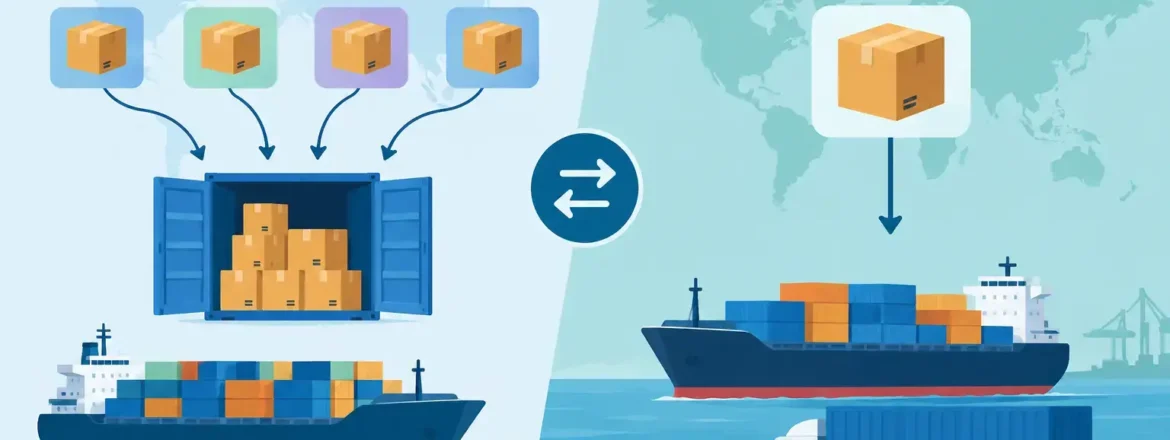
Freight consolidation combines cargo from several customers into one larger shipment traveling on the same air, sea, or road route. Each sender’s goods remain separately identified and documented, but the transportation space is shared. This allows shipping costs to be distributed across multiple consignments.
Think of a UAE-to-Pakistan sea cargo container carrying carefully packed household boxes from several families, along with properly prepared commercial cartons from small businesses. Instead of one customer paying for the full container, everyone pays for the space their cargo uses. The same principle can apply to air cargo, where smaller consignments are grouped under a planned shipment schedule.
Consolidation is commonly a strong fit for personal effects, non-urgent household cargo, retail replenishment, spare parts, packaged goods, and other shipments that do not require an exclusive vehicle, container, or flight arrangement.
Why consolidated freight costs less
The key advantage is efficiency. International freight involves costs beyond transport itself, including cargo handling, documentation, terminal processing, and shipment coordination. Grouping compatible cargo lets these operational costs be shared more effectively.
For customers shipping a few boxes, furniture, appliances, or business cartons, this can be far more practical than booking a full container or dedicated service. It also makes international cargo accessible when a shipment is too large for baggage but too small to justify exclusive transport.
What to expect with timing
Consolidated shipments usually follow planned departure schedules. Cargo may need to arrive at the warehouse, be measured, packed or repacked if needed, documented, and grouped with other cargo going to the same destination. At the destination, it is separated for customs clearance and final delivery.
This process can add time compared with a direct shipment. It does not mean the cargo is being neglected. It means the shipment is moving through a shared, carefully coordinated route. Customers with flexible delivery dates often find that the savings are worth the additional transit time.
What Is Direct Shipping?
Direct shipping means your cargo is moved under an arrangement dedicated to your shipment or sent on the fastest available route without waiting to be grouped into a consolidated load. Depending on the shipment, this may involve a dedicated vehicle, full container load, priority air freight, or another service built around a specific departure and delivery requirement.
Direct shipping is usually selected when cargo is urgent, high-volume, time-sensitive, or requires tighter control over its movement. A business sending inventory for an upcoming launch, for example, may have little room for a missed delivery date. A family relocating on a fixed schedule may also prefer a more direct route for essential belongings.
Why direct shipping can be faster
Because the cargo does not need to wait for other shipments to fill a shared load, there are fewer coordination stages before departure. The route and service can be planned around the shipment’s own requirements. In many cases, this reduces waiting time at origin and can provide a more predictable delivery window.
However, faster does not always mean instant. International delivery still depends on flight or vessel schedules, customs requirements, documentation accuracy, destination conditions, and final-mile delivery arrangements. A reliable cargo provider will explain the expected timeline clearly instead of making promises that customs or transport schedules cannot support.
Why the price is higher
With direct shipping, the cost of space, handling, and transport is assigned primarily to one customer. That can make it more expensive, particularly for small cargo volumes. The extra cost may be worthwhile when a delayed shipment could affect a business sale, relocation plan, project deadline, or important personal need.
Freight Consolidation Versus Direct Shipping: Key Differences
The decision is not simply about choosing the cheapest or fastest option. It is about matching the service to the real value and urgency of your shipment.
Consolidated freight is generally more economical for smaller and less urgent shipments. It uses shared capacity and planned schedules, so transit may be longer. Direct shipping generally offers greater speed and control, but costs more because the shipment is not sharing transport space with other customers.
Handling also differs. Both services should include proper labeling, secure packing, documentation, customs support, and shipment monitoring. With consolidated cargo, goods pass through a consolidation and deconsolidation process, so durable packing becomes especially important. With direct cargo, there may be fewer handling points, but professional packing remains essential for fragile, valuable, or bulky items.
For many customers in the UAE, pickup convenience is another practical factor. A door-to-door provider can collect cargo from your home, office, warehouse, or shop, assess the shipment, arrange packing where required, and guide you through the paperwork. This removes the burden of transporting heavy goods to a cargo terminal yourself.
How to Choose the Right Option for Your Cargo
Start with the delivery deadline. If the goods must reach Pakistan or India by a specific date, tell your cargo provider before booking. Be clear about whether the date is preferred or non-negotiable. This helps determine whether a consolidation schedule is suitable or a direct option is safer.
Next, consider the shipment size. A few cartons, personal items, or household boxes are often well suited to consolidation. A full home move, large commercial order, or frequent wholesale shipment may need a dedicated arrangement, especially if it can fill a substantial part of a vehicle or container.
Then look at the value of the goods and the cost of delay. A shipment of ordinary household items may be able to travel on a cost-effective consolidated schedule. Replacement parts needed to keep a business operating may justify the premium for a faster service. The best decision considers the total cost, not only the freight quote.
Finally, check the cargo itself. Fragile goods, electronics, furniture, machinery, liquids, food products, and commercial merchandise can have different packing, customs, and transport requirements. Share an accurate cargo list, including quantities, dimensions, and destination address. Surprises at pickup or customs can create avoidable delays under either shipping method.
Packing and Documents Matter in Both Options
Whether you choose consolidated or direct freight, good preparation protects your cargo and helps it move without unnecessary hold-ups. Use strong cartons, internal cushioning for breakable goods, moisture protection where needed, and clear labels with sender and receiver details. Furniture and large household items should be wrapped to prevent scratches, dents, and shifting during transport.
For commercial shipments, invoices, packing lists, product descriptions, and any destination-specific documents should be accurate and complete. Personal cargo may require identification and a detailed item list. Customs rules vary by destination and product type, so it is better to ask questions before collection than to discover a restriction after the shipment has been packed.
A hands-on cargo partner can help organize these details, from pickup and packing to customs clearance and final delivery. Bab Al Saad Cargo Services supports customers across the UAE with cargo solutions designed around the shipment rather than a one-size-fits-all approach.
When Consolidation Is the Better Choice
Choose consolidated freight when your delivery date is flexible, your shipment is relatively small, and keeping costs manageable is a priority. It is particularly useful for expatriates sending personal effects home, families moving non-essential household goods, and smaller businesses replenishing stock without an urgent deadline.
It can also be a smart recurring option. A trader who sends regular, moderate-volume shipments may save significantly by planning around scheduled consolidated departures instead of paying for direct service every time.
When Direct Shipping Is Worth It
Direct shipping is often worth considering when time is critical, cargo volume is large, or the shipment needs a defined movement plan. It may suit urgent commercial orders, project cargo, larger relocations, high-value goods, or shipments tied to a fixed event or business commitment.
The higher price should be viewed against the consequence of waiting. If a late delivery causes lost sales, production delays, extra storage costs, or personal disruption, direct shipping may provide better overall value.
The most helpful choice is the one that respects both your timeline and your budget. Share your cargo details early, ask for a realistic transit estimate, and choose the service that lets your shipment arrive safely with the right level of speed and care.