
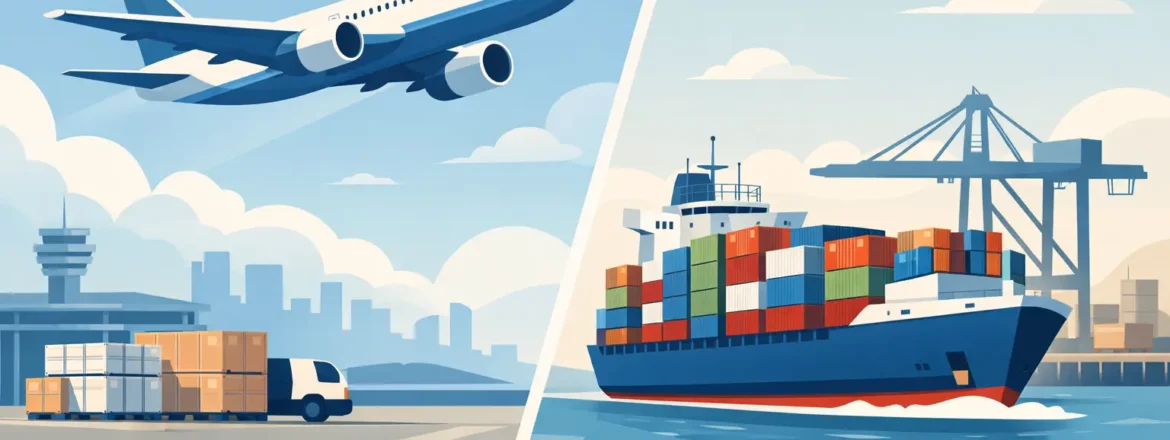
A family in Dubai sending urgent documents and a trader moving a large shipment of goods face the same decision, but the right answer may be completely different. When comparing air freight vs sea freight, the best option depends on what you are shipping, how soon it must arrive, your budget, and the level of handling required from pickup through final delivery.
For customers shipping from the UAE to Pakistan, India, the UK, the USA, Europe, and other destinations, freight is not only about getting cargo onto a plane or vessel. It is about arranging collection, packing goods properly, completing customs paperwork, and ensuring the shipment reaches the recipient safely. Choosing the right mode at the start can prevent unnecessary cost, delays, and stress later.
Air Freight vs Sea Freight: The Main Difference
Air freight moves cargo by aircraft. It is designed for speed and is often the preferred choice for urgent personal parcels, documents, samples, electronics, medicines, and smaller commercial shipments. Depending on the destination, flight schedules, customs clearance, and final delivery location, air cargo can arrive much faster than a sea shipment.
Sea freight moves cargo by container vessel. It takes longer, but it is usually more economical for larger, heavier, or less time-sensitive loads. Household furniture, appliances, bulk inventory, commercial stock, and relocation cargo are common examples of shipments that may be better suited to sea freight.
The simple rule is this: use air freight when time has a high value. Use sea freight when shipment volume is high and delivery can wait. Still, the final decision should account for chargeable weight, destination requirements, and the services needed at both ends.
When Air Freight Is the Better Choice
Air freight is the practical option when an item needs to reach Pakistan, India, or another international destination quickly. It can be especially useful for business owners sending replacement stock, product samples, or urgent customer orders. For individuals, it works well for important documents, personal belongings needed immediately, and smaller packages that cannot wait for a vessel schedule.
Speed is the clearest advantage, but it is not the only one. Air shipments generally spend less time in transit, which can reduce the risk of damage for sensitive goods when they are professionally packed. Faster movement can also help businesses avoid lost sales when inventory is running low.
However, air freight is typically priced higher than sea freight. Airlines calculate charges using actual weight or volumetric weight, whichever is greater. A lightweight but bulky carton can therefore cost more than expected. This is why accurate measurements and packing advice matter before booking an air shipment.
Air freight is often a strong fit when your cargo is:
- Urgent, time-sensitive, or required for a fixed date
- Small to medium in size
- High in value compared with its weight
- Perishable, delicate, or sensitive to long transit periods
- Commercial stock needed to avoid an inventory shortage
Some products also face airline restrictions. Batteries, liquids, perfumes, aerosols, and other regulated goods may need special documentation, approved packaging, or an alternative shipping method. A reliable cargo provider should check these requirements before collection, not after the shipment has been packed and dispatched.
When Sea Freight Makes More Sense
Sea freight is built for volume. If you are sending several cartons, furniture, household goods, machinery, or a large commercial order, a sea shipment can offer much better value per kilogram or cubic meter than air freight.
For UAE residents moving belongings back to Pakistan or India, sea cargo is often the more affordable route for items that are useful but not urgently needed. A sofa, dining table, kitchen appliances, clothing cartons, and other household goods can take more time to arrive without forcing the sender to pay premium air rates.
Businesses also benefit from sea freight when planning stock replenishment in advance. Importing larger quantities by sea can lower freight costs and make pricing more competitive. The trade-off is planning. Vessel schedules, port processing, customs clearance, and onward delivery all require more lead time than air cargo.
Sea freight can be arranged as a full container load or as shared container space. A full container load is usually suitable for larger moves or commercial shipments that can fill most or all of a container. Shared container shipping allows customers with smaller volumes to pay for the space they use, making it a practical option for household cargo and small business consignments.
Sea freight is usually the right choice when your cargo is:
- Large, heavy, or made up of multiple cartons
- Household cargo for a relocation or family delivery
- Commercial inventory that can be planned well ahead
- Too bulky for economical air shipping
- Not required immediately at the final destination
Lower cost does not mean lower care. Proper export packing, labeling, inventory preparation, and customs documents remain essential. A poorly packed sea shipment can be exposed to long handling cycles, container loading, port movement, and extended transit time.
Compare Total Cost, Not Only the Freight Rate
The lowest freight quote is not always the lowest total shipping cost. Before deciding between air and sea, ask what is included in the service. Pickup from your UAE location, packing materials, export documentation, customs clearance, destination handling, and door-to-door delivery can all affect the final amount.
A low rate that excludes key services can create surprises later. For first-time shippers, door-to-door cargo service is often easier because one provider manages collection, freight booking, customs coordination, and delivery to the recipient. It also gives you a clearer point of contact if you need an update.
Commercial shippers should also consider the cost of waiting. Sea freight may save money on transport, but a delayed restock can cost more in missed sales than the difference in freight charges. On the other hand, using air freight for every order can reduce margins quickly. Many businesses use a mix of both: air freight for urgent replenishment and sea freight for planned bulk stock.
Delivery Time Is More Than Transit Time
Customers often ask, “How many days will it take?” That is the right question, but the answer involves more than the flight or vessel journey. Pickup timing, export clearance, flight or vessel availability, destination customs, and final-mile delivery all influence the actual door-to-door timeline.
Air freight is faster, but customs checks can still add time if paperwork is incomplete or the goods are restricted. Sea freight is slower by nature, and port congestion or weather can affect schedules. The best way to avoid preventable delay is to provide a clear packing list, accurate receiver details, and honest information about every item in the shipment.
For cargo to Pakistan and India, local destination knowledge is especially valuable. Customs procedures, delivery locations, and documentation expectations can vary. Working with a cargo partner that understands these key routes helps make the process more predictable for both personal and commercial senders.
How to Make the Right Freight Decision
Start by looking at four practical factors: urgency, size, budget, and cargo type. If delivery is urgent and the shipment is compact, air freight is likely worth the added cost. If the goods are heavy, bulky, and not needed soon, sea freight will often be the smarter financial decision.
Next, consider how much support you need. Packing a few personal cartons is different from sending fragile furniture, trading stock, or an entire household. Professional packing and removals help protect goods, while pickup service saves time for customers who cannot bring cargo to a warehouse themselves. Storage can also be useful if your shipment is ready before the recipient or final delivery address is available.
Bab Al Saad Cargo Services helps customers arrange air and sea cargo from major UAE locations, with pickup, packing, customs support, and door-to-door delivery options. That means you can choose the freight method based on your real needs rather than trying to manage multiple providers and paperwork alone.
The best shipment is not automatically the fastest or the cheapest. It is the one that reaches the right person in the right condition, at a cost and timeline that make sense for your family or business. Share your cargo details early, ask for a clear quote, and choose the route that gives your shipment the care it deserves.