
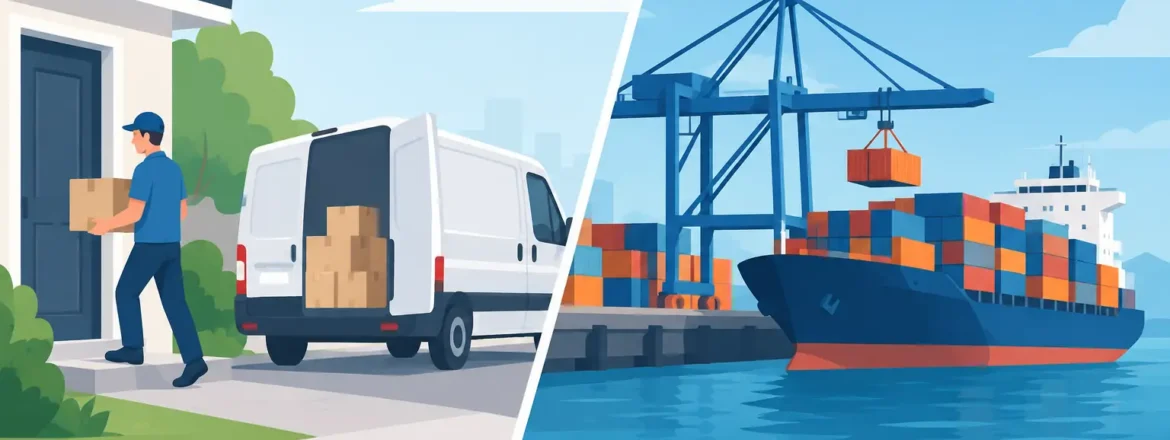
A shipment can look affordable until it reaches the destination port and the receiver is asked to arrange customs documents, local transport, or port collection. That is why understanding door to door vs port shipping matters before you book cargo from the UAE to Pakistan, India, or another international destination.
The right option depends on what you are sending, who will receive it, and how much responsibility you want to manage yourself. Door-to-door service is built for convenience and support from pickup through delivery. Port shipping can work well for experienced importers, but it often leaves more work and local costs for the consignee.
What Is Door-to-Door Shipping?
Door-to-door shipping means your cargo provider collects the shipment from your home, office, warehouse, or shop in the UAE and coordinates delivery to the recipient’s address at the destination. The service may include packing, export handling, freight movement, customs coordination, and final-mile delivery, depending on the shipment and destination rules.
For families sending household items to Pakistan or India, this removes the need to travel to a port, find a freight agent after arrival, or arrange a truck for delivery. For businesses, it creates one clear point of contact for cargo collection, documentation, and shipment updates.
A door-to-door cargo quote should clearly explain what is included. Ask whether customs duties, destination charges, packing, insurance, or restricted-item handling are included or billed separately. A dependable provider will explain these details before collection, not after the cargo has left the UAE.
Why customers choose door-to-door cargo
The biggest benefit is responsibility. Instead of coordinating several companies across two countries, you work with one cargo partner that manages the journey from pickup to final delivery. This is especially useful when the receiver is elderly, busy, unfamiliar with shipping procedures, or located far from a major port or airport.
Door-to-door shipping is also practical for mixed household cargo. Boxes, furniture, appliances, clothing, personal effects, and small commercial consignments can often be collected together. Professional packing helps protect items during handling, loading, ocean or air transit, and local delivery.
What Is Port Shipping?
Port shipping, sometimes called port-to-port shipping, means the cargo is transported from the origin port to the destination port. The sender usually arranges transport to the departure port, while the receiver is responsible for collecting cargo from the arrival port or appointing a local clearing agent.
This option can be suitable for established importers, traders, and companies that already have customs brokers, warehouse space, and transport partners at the destination. They may prefer direct control over customs clearance and inland delivery, particularly for large commercial shipments.
However, port shipping is not simply a cheaper version of door-to-door service. The freight charge may look lower because important services are not included. The receiver may still need to pay terminal handling fees, clearance fees, storage fees, documentation charges, customs duty, and local transport costs.
What the receiver must handle
With port shipping, the recipient often needs to manage several tasks after the cargo arrives. These can include collecting the original documents, arranging customs clearance, paying applicable charges, completing inspections, booking a truck, and collecting the shipment before storage fees increase.
This requires local knowledge and quick action. If paperwork is incomplete or the receiver cannot respond promptly, cargo can be delayed at the port. For personal shipments, these responsibilities can turn a low freight quote into a stressful and expensive experience.
Door to Door vs Port Shipping: The Main Differences
The key difference is not only where the shipment starts and ends. It is who takes responsibility for the steps in between.
With door-to-door shipping, the cargo company generally coordinates pickup in the UAE, freight movement, destination handling, and delivery to the recipient. With port shipping, the carrier’s responsibility usually ends when the cargo reaches the destination port. The receiver then takes over.
Cost is another important difference. Port shipping may offer a lower initial freight rate, particularly for full-container commercial cargo. Door-to-door shipping may cost more upfront because it includes collection, coordination, and final delivery. Yet for many personal senders, it can offer better overall value because fewer separate arrangements are needed.
Timing can vary too. Door-to-door delivery includes inland transport at both ends, so the estimated delivery date should account for pickup, customs processing, and final-mile delivery. Port shipping may arrive at the port quickly, but the shipment is not truly complete until the receiver clears and collects it.
When Door-to-Door Shipping Is the Better Choice
Door-to-door cargo is usually the better fit when convenience, support, and predictable handling matter more than managing every step yourself. It is especially useful for first-time shippers, expatriates sending personal items home, families relocating, and small businesses without a destination logistics team.
Choose door-to-door service if the receiver needs cargo delivered to a residence, shop, or warehouse; if you want collection from anywhere in the UAE; or if you prefer help with packing and shipment documentation. It is also a strong choice for sending cargo to cities outside major port areas, where arranging local collection can be difficult.
For UAE-to-Pakistan and UAE-to-India shipments, destination experience matters. Customs procedures, documentation requirements, and delivery arrangements can differ by cargo type and location. A provider familiar with these routes can help you prepare correctly before the shipment is collected.
When Port Shipping May Make Sense
Port shipping can be practical for high-volume commercial shipments when the importer has a reliable local agent and knows the clearance process. A company importing stock in container quantities may already have contracts for port handling, customs clearance, warehousing, and domestic transport. In that situation, port-to-port freight can give the importer more control over each cost category.
It may also suit a receiver located close to the destination port with their own transport capacity. Even then, compare the full landed cost, not just the ocean freight rate. A lower quote at booking can be outweighed by destination charges, delays, and the cost of arranging services separately.
Port shipping is generally less suitable for personal boxes, household goods, or senders who do not have an experienced contact at the destination. If the receiver is unsure where to go, what documents to provide, or how to arrange clearance, door-to-door service is usually the safer choice.
Questions to Ask Before You Book
Before choosing either option, ask for a written explanation of the shipment scope. Confirm the pickup address, destination address or port, estimated transit time, packing requirements, and any items that cannot be accepted.
You should also ask who handles export customs, destination customs coordination, duty and tax payments, delivery, and storage if the shipment is delayed. For commercial cargo, verify invoice requirements, packing lists, product descriptions, and any permits needed for the goods.
Weight and volume affect pricing. Large but lightweight household items may be charged by volume, while dense commercial items may be charged by actual weight or freight measurement. Accurate dimensions and a clear item list help prevent changes to the quote later.
Make the Choice Based on the Full Journey
The best shipping option is the one that matches your real responsibilities after the cargo leaves the UAE. If you want pickup, careful handling, responsive updates, and delivery to the recipient’s address, door-to-door service offers the simplest path. If you have an experienced receiver, a customs agent, and local transport already arranged, port shipping may be worth considering.
Before sending your cargo, share the item list, pickup location, destination city, and delivery preference with Bab Al Saad Cargo Services. A clear quote based on the full journey helps you choose with confidence and gives your receiver fewer surprises after arrival.