
A few cartons, furniture for a family home, or stock for your business can all travel by sea from the UAE. The right option is not always obvious. With LCL versus FCL shipping, the best choice depends on your cargo volume, budget, delivery deadline, and how much control you need over the shipment.
For customers sending cargo from Dubai, Sharjah, Abu Dhabi, or other UAE locations to Pakistan, India, and beyond, sea freight can offer excellent value. The key is choosing the container arrangement that matches the shipment instead of paying for space you do not need or accepting delays you cannot afford.
What LCL and FCL Shipping Mean
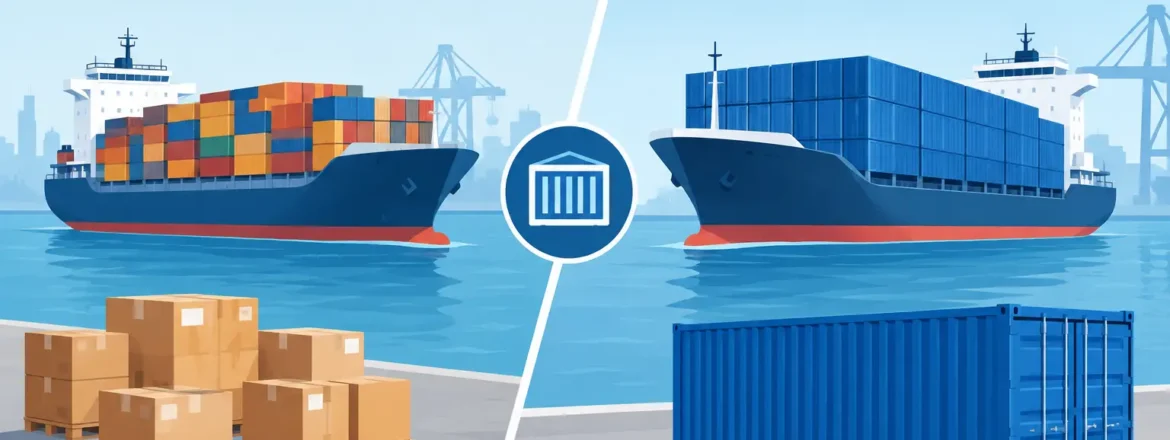
LCL means Less than Container Load. Your cargo shares a shipping container with goods belonging to other customers. Each shipment is packed, labeled, and documented separately, then consolidated into one container at the origin port. Once the container reaches its destination, the cargo is separated before onward delivery.
FCL means Full Container Load. You reserve an entire container for your shipment. The container may be a 20-foot or 40-foot unit, depending on the amount and type of cargo. Even when your cargo does not fill every corner, the container is used only for your goods.
Neither method is automatically better. LCL is often the sensible answer for smaller loads, while FCL can become more economical and easier to manage as volume increases.
LCL Versus FCL Shipping: The Cost Difference
Cost is usually the first question, but the quote should be viewed as a complete shipment cost, not only a freight rate.
With LCL, you pay for the volume your cargo occupies, normally measured in cubic meters. This makes it practical for personal belongings, a limited number of cartons, small furniture shipments, samples, or a business order that does not justify a full container. You avoid paying for unused container space.
However, LCL involves more handling. Cargo must be received at a consolidation warehouse, grouped with other shipments, loaded into the container, and separated at destination. Those steps can create handling, documentation, consolidation, and destination charges. For a very small shipment, LCL is usually cost-effective. As the shipment grows, the total can approach the price of a full container.
With FCL, the price is based mainly on the container rather than each cubic meter. A full container can offer better value for large household moves, commercial inventory, machinery, building materials, or regular trade cargo. It also makes budgeting more predictable because you know the container cost from the beginning.
The break-even point varies by route, season, container availability, and destination charges. A quote based on accurate cargo measurements is the only reliable way to compare the two options. Estimating from a few photos or the number of boxes alone can lead to an unpleasant surprise later.
Transit Time and Handling: Where FCL Has an Edge
Both LCL and FCL move by ocean vessel, so the sea transit itself may be similar on the same route. The difference comes before and after the vessel journey.
LCL cargo needs time to be consolidated before departure. The container may not leave until all planned cargo has been received and loaded. At destination, it must be unpacked and each shipment sorted before customs procedures and final delivery can continue. This can add days compared with a direct full-container shipment.
FCL cargo is loaded into one dedicated container, sealed, and sent to the port. At destination, the sealed container can move through clearance and delivery procedures as one unit. There are fewer warehouse transfers and fewer touchpoints.
For time-sensitive commercial cargo, FCL may be the safer choice when volume supports it. For personal cargo that is not urgently needed, LCL often provides the better balance of cost and service.
Security and Cargo Protection
Every sea shipment should be packed properly, whether it travels as LCL or FCL. Still, the handling process differs.
LCL cargo is moved more often because it is loaded and unloaded during consolidation and deconsolidation. Strong cartons, internal cushioning, moisture protection, clear marks, and secure palletizing help prevent damage. Fragile items need special attention, especially furniture, electronics, glassware, and household appliances.
FCL offers greater control because the container is loaded with your goods and sealed at origin. It is generally a strong option for high-volume shipments, cargo with complex packing needs, or products that should not be mixed closely with other freight. A dedicated container also makes it easier to organize loading, use protective materials, and create a loading plan.
That said, FCL does not remove the need for professional packing. Containers can experience heat, humidity, and movement at sea. Proper wrapping, bracing, and placement are essential for safe delivery.
Which Option Works for Household Cargo?
LCL is a practical choice when you are sending a manageable amount of household goods from the UAE to Pakistan or India. It suits customers sending boxes of clothing, kitchen items, gifts, small appliances, or selected furniture pieces to family members. It can also work well for someone moving in stages rather than transporting an entire home at once.
FCL is usually more suitable for a full home relocation, a villa move, or a large quantity of furniture and appliances. If you have enough cargo to fill most of a container, the dedicated space can simplify packing, reduce handling, and make the overall move more manageable.
Customers should also consider access at both ends. If a container cannot be easily positioned near the pickup or delivery address, the cargo may need additional local transport and handling. A logistics provider can advise on the practical arrangement before booking.
Which Option Works for Commercial Shipments?
For traders and small businesses, LCL supports flexible purchasing. You can import or export smaller quantities, test a new product line, or replenish stock without tying up money in a large order. This is useful when storage space is limited or demand is still uncertain.
FCL is often better for established product lines, bulk stock, wholesale goods, and shipments with a regular schedule. A full container can lower the shipping cost per unit, protect margins, and provide more control over loading. Businesses shipping pallets, cartons, machinery, spare parts, or heavy goods should compare the all-in cost carefully rather than assuming LCL is cheaper.
Commercial shipments also require correct invoices, packing lists, product descriptions, and customs documentation. Missing or inaccurate paperwork can delay either LCL or FCL cargo. The shipping method changes the container setup, but it does not reduce the need for proper customs compliance.
Questions to Ask Before You Choose
Before deciding, confirm your cargo volume in cubic meters, total weight, number of packages, and whether any items are fragile, oversized, or restricted. Also consider the delivery deadline and whether you need door-to-door service, port-to-port shipping, packing, customs clearance, or storage.
Ask for a clear quote that identifies origin handling, sea freight, customs-related costs where applicable, destination handling, and final delivery. The lowest initial rate is not always the lowest total cost. This is especially relevant for LCL, where destination charges can have a bigger impact on smaller shipments.
It also helps to plan early. Sea freight schedules, port congestion, weather, holidays, and customs inspections can affect timing. Booking early gives more room to select the right service instead of making a costly last-minute decision.
Get the Container Choice Right From the Start
Bab Al Saad Cargo Services helps customers assess their cargo, arrange UAE pickup, prepare shipments for sea freight, and manage the journey through final delivery. Whether you are sending a few cartons to family or moving commercial goods at scale, clear measurements and complete shipment details make the decision easier.
If your cargo is small and your budget matters most, LCL may be the right fit. If your shipment is large, urgent, or needs dedicated handling, FCL may provide better value and peace of mind. A detailed cargo assessment before packing is the simplest way to avoid paying for the wrong kind of space.